

Close the Gap Catalyst
advancing women
Hiring!
Role: State Legislator
Location: California State Legislature
Legislature Overview
The full-time members of the California State Legislature hold some of the most powerful elected positions in the country.
With nearly 40 million people, the California economy is the 4th largest in the world. What happens here doesn’t just stay here: California state policy sets the tone nationally. When California passes laws protecting individual rights, advancing education, and lifting up vulnerable populations, it creates a model that other states and progressive leaders follow.
For too long, the Legislature hasn’t been fully reflective of the people of California. In 2013, the Legislature hit a 20-year low for women’s representation of just 22% women members. Today, women are 49% of legislators. We need your help to make sure that the legislators wielding the state’s immense power actually reflect the people they represent.
Description of Role
Due to the state’s large population and relatively small legislature (120 members across the Assembly and Senate), each member of the Assembly represents about half a million people and each Senator represents about one million constituents.
Members of the legislature have a wide-ranging portfolio to establish state policy and determine how more than $300 billion in state taxpayer money is spent. The majority of tax dollars are allocated to public education, public safety, health care and environmental protection.
Beyond the budget, California legislators have the power to set policy on a wide range of issues facing the state, including how businesses operate, banking policy, education, land use, election law, the environment, public health, criminal justice, and much more.
See an overview of the legislative process here.
See CalMatters’ Digital Democracy tool for an overview of the California Legislature.
I am proud of my [Legislative Women’s Caucus] colleagues’ dedication toward helping the most vulnerable in our communities, whether through expanding educational and professional opportunities for women and girls, or making life in California more affordable… women are taking the lead in upholding the dignity of working women, women leading their households, women patients, survivors of intimate partner violence, and incarcerated women and their family members. Together, our leadership can make a better California not just for women and girls, but for everyone.
Job Responsibilities
California’s state legislators work full-time to draft, debate, and vote on legislation to change state law. With the Governor, they review and pass the annual state budget. They work to bring state tax dollars home to their districts to support local programs and governments. They also oversee state agencies, vote to confirm executive appointments, and help their constituents navigate state services.
Committee assignments: Much of the work of the legislature happens in committees, where newly introduced bills are reviewed, hearings are held, and committee members vote on whether bills should advance to the floor. Legislators are assigned by leadership to work in committees covering different policy areas, and may be asked to lead the policymaking process as committee chair or vice chair. Find a list of committees for Assembly here and Senate here.
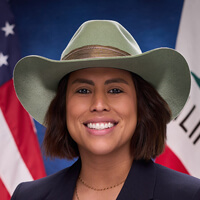
For example, Assemblymember Celeste Rodriguez, first elected in 2024, held the following committee assignments during the 2025-2026 session:
- Standing Committees: Health; Higher Education; Human Services; Water, Parks, and Wildlife
- Select Committees: Latina Inequities (Chair), Community Economic Mobility and Investment
Legislative Staff: Each legislator is assisted by multiple staff members across their Capitol Office and District Offices. Legislators receive a base allocation of funds every year to spend on staff salaries and operating expenses–at the time of this 2023 analysis, Assemblymembers had an average of 6-11 staff each and received a base allocation of $340,000 for salaries per session year.
Staff may include a Chief of Staff to manage overall operations and policy strategy, a Legislative Director to research policy and guide legislation, Legislative Assistants to track bills and perform administrative duties, a Scheduler, a Communications Director to manage press relations, a District Director to oversee operations in the home district office, Field Representatives who liaise with constituents and the district community, and Constituent Services Representatives who assist residents to navigate state programs. Additional shared and nonpartisan support staff are employed by legislative committees and offices to analyze policy and provide legal or fiscal advice.
Learn more about the importance of legislative staff here.
Work Schedule: Typically the Legislature meets Monday through Thursday in Sacramento while it is in session. Activities include committee meetings, floor votes, constituent meetings, meetings with interest groups, and meetings with colleagues. Absences from session are rare.
In addition, most legislators keep a robust schedule in the district on weekends and during recess periods. Activities include constituent meetings, speeches to local organizations, tours of district businesses and projects, and meetings with local elected officials. On the unofficial side, receptions, fundraising events and political meetings are constant both in Sacramento and in district
The Legislature operates on a two-year cycle. The 2025-26 session, for example, began on December 2, 2024, and adjourned on November 30, 2026. Within this two-year cycle, individual legislative years generally begin in January and conclude in late August or September, with time off for spring and summer recesses. This legislative calendar determines how and when a bill can become a law.
Travel expectations: Legislators split their time between their offices at the State Capitol in Sacramento and their home districts. Some legislators whose home districts are far from the capitol stay in Sacramento hotels during the week, and others rent apartments–often with fellow legislators as roommates–or purchase second homes.
One of the most wonderful things about this job is impact, the change that can be made. Whether it’s being able to win real resources for important programs and initiatives and services in my district to creating cutting-edge policy that deals with things like climate change and what the future of California will look like…

Qualifications
State legislators come from a variety of backgrounds, including educators, social and nonprofit workers, legislative staff, union leaders, healthcare workers, and lawyers. Single, married, partnered, parent, non-parent, grandparent and great-grandparent legislators have all served. Common themes of successful legislators include:
- Deep community ties: Members have usually built strong connections with the people they seek to represent whether through living, growing up, working, worshipping, organizing, serving, raising a family, or otherwise being embedded in the district’s daily life. Connections to constituents can also be through shared ethnic, cultural, or linguistic backgrounds. District lines are redrawn every 10 years, and a strong candidate doesn’t need to have spent a lifetime of residency to represent a district well. They do need to have genuine relationships and strong investment in the people who live there.
- Prior public service: Members have often worked in positions that benefit their community, such as education, healthcare, or community organizing. Many, but not all, have served in local public office (e.g. School Board, City Council, County Board), or in appointed government positions like state or local commissions or task forces prior to running.
- Activism: Many founded a non-profit, led a community effort for reform, or otherwise have been a voice for change associated with an issue such as education, workers’ rights, mental health, social justice, etc.
- Public presentation and leadership: Speaking skill and experience with media management are helpful, along with professional leadership skills like team management, delegation, strategic planning, and timeliness. An existing media presence helps establish name recognition and issue expertise.
- Executive and entrepreneurial spirit: Members benefit from executive experience leading teams, programs, or organizations. Running and serving are two sides of the same coin. Campaigns feel like start ups, so comfort with ambiguity and leading a team through uncertainty is helpful. Once in the Legislature, members need to be able to navigate a large institution with many written and unwritten rules.
- Campaign experience: Many members were active on other elected officials’ campaigns or ballot measures before running themselves.
- People-centered: Members spend real time with people from all different walks of life on the campaign trail, at community events, fundraising, and once in office. Working with the community and listening to individuals is central to the job. The strongest members build authentic relationships and use them to weave connections that benefit their district.
- A record of accomplishment: Tangible achievements in business, labor, and/or nonprofit organizations demonstrate to voters that candidates are able to get things done and can handle the important decisions at the legislature.
Compensation & Term
- Salary: Legislators earn a base annual salary ($134,694 as of 2026). Legislators who hold leadership positions receive higher salaries. Legislators are also permitted to perform additional professional work on the side, typically in professions conducive to part-time occasional projects such as consulting, law, or real estate.
- Per Diem: Legislators receive a per diem allowance of $236 (equal to the amount allowable to a federal employee while away from home, $150 for lodging and $86 for meals and incidentals as of 2026) to help cover lodging and meals in Sacramento.
- Healthcare: Legislators’ healthcare benefits are similar to those of state employee managers, with the same health insurance plan options available (10 HMO plans, one EPO plan and two PPO plans) and the same monthly employer health contribution of $968 for single coverage and $2,417 for family coverage for 2026. Dental and vision insurance plan options are available, and premium coverage by the state varies by chamber.
- Retirement: Legislators do not qualify for state pensions, long term care coverage or select other benefits available to state employees.
- Term: Assemblymembers serve 2-year terms and Senators serve 4-year terms, with a lifetime maximum service limit of 12 years total in the legislature.
Find more information on available benefits and coverage, per diem payments, and the most up-to-date salary information from the California Citizens Compensation Commission here.
How to Apply
Most (but not all) prospective candidates begin preparing for a legislative campaign around two years before they officially announce. Candidates should prepare by developing relationships with political players locally and in Sacramento, building name recognition, and earning early support. Party endorsement processes also begin nearly a year before the election, so starting early matters.
Just as important as the political foundation is the personal groundwork. Running for office—and serving—asks a lot of a person’s time, finances, relationships, and privacy.
When you’re ready to “apply”, filing deadlines to submit a Declaration of Candidacy and filing fee or signatures in lieu of the fee, as well as other important dates for upcoming elections, may be found on the Secretary of State website.
Close the Gap California recruits women to run in targeted open and flippable seats. Their bespoke Exploration Process is designed to help women seriously and honestly think through the decision to run. Prospective candidates are encouraged to work through this process with a CTG recruiter well before filing deadlines and understand what the job demands, what it means for your family and career, and whether this is the right moment to run.
If you’re interested in running in a target seat, reach out to: [email protected].
For additional training and support, visit https://closethegapca.org/how-to-decide/.